
In the field of GTAW welding aluminum, we have observed that procurement departments often treat “99.9% pure argon gas” as a standardized commodity for gas tungsten arc welding (GTAW), unaware that this decision may compromise weld integrity, reduce production efficiency, and ultimately inflate project costs. The core misconception lies in treating GTAW welding aluminum gas as a mere shielding layer, failing to recognize that it is an active, dynamic component of the plasma arc itself.
During GTAW welding of aluminum, the gas performs three critical and interrelated functions: First, it provides shielding to prevent rapid formation of aluminum oxide (Al₂O₃). Second, its ionization potential and thermal conductivity directly determine arc characteristics and heat input penetration curves. Most crucially, it enables the “cathodic cleaning” effect that breaks down the oxide layer during alternating current cycles. Inappropriate selection or improper application of GTAW aluminum welding gas can lead to weld discoloration, abnormal arcs, internal porosity, or insufficient penetration.
This article will delve into the precise selection and application of GTAW aluminum welding gas, detailing the synergistic control mechanism between gas flow and electrical parameters to help you fully understand and effectively utilize GTAW aluminum welding gas.
Fundamental Understanding—Why GTAW Welding Gas for Aluminum Matters
In the field of GTAW welding aluminum, many decision-makers fail to fully grasp the significance of shielding gas. It is not merely a consumable but an active process medium during welding.
Aluminum's Reactivity and Oxidation Challenges
When GTAW welding aluminum, we must confront its fundamental metallurgical challenge: aluminum exhibits an extremely high affinity for oxygen. When exposed to air, aluminum instantly forms a thin oxide film. While this film provides macro-level protection for the base material, it introduces significant difficulties for GTAW aluminum welding.
The oxide film has a melting point of approximately 2050°C, far exceeding the melting point of the aluminum substrate (around 660°C). During GTAW aluminum welding, if this oxide layer is not effectively removed or prevented from forming, it acts as a robust barrier, directly causing defects such as lack of fusion and weld contamination. Therefore, the primary objective of GTAW welding aluminum gas is to create an oxygen-free environment for the weld pool and heat-affected zone, fundamentally suppressing the instantaneous oxidation reaction at high temperatures.
The Triple Core Functions of GTAW Welding Aluminum Gas
The role of shielding gas in GTAW aluminum welding can be summarized in three aspects:
First, GTAW welding aluminum gas forms a laminar barrier that effectively excludes atmospheric nitrogen, oxygen, and water vapor, preventing their dissolution into the weld pool and causing porosity and embrittlement.
Second, as a plasma medium, the ionization potential and thermal conductivity of the shielding gas directly determine arc stability, concentration, and the efficiency of heat transfer to the workpiece. For instance, adding helium significantly increases arc voltage and energy density.
Third, it promotes Cathode Atomization. During the negative half-cycle of alternating current (electrode negative), the bombardment of GTAW aluminum welding shielding gas ions serves as the key physical mechanism for breaking down surface oxide films.
In-Depth Analysis of the "Cathode Atomization" Effect
Cathode atomization” is a unique and critically important physical phenomenon specific to AC GTAW welding of aluminum, whose effectiveness directly depends on the choice of shielding gas. During the negative (EN) cycle of the alternating current, the workpiece acts as the cathode, bombarded by accelerated positive ions. This bombardment serves a dual purpose: first, it breaks up and removes the aluminum oxide layer on the workpiece surface through kinetic energy, exposing clean base metal; second, the cleared area provides a pathway for electron emission, stabilizing the arc.
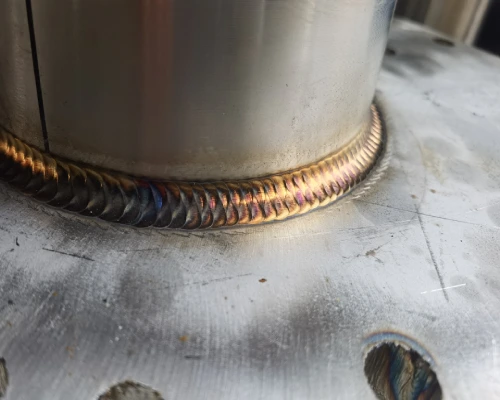
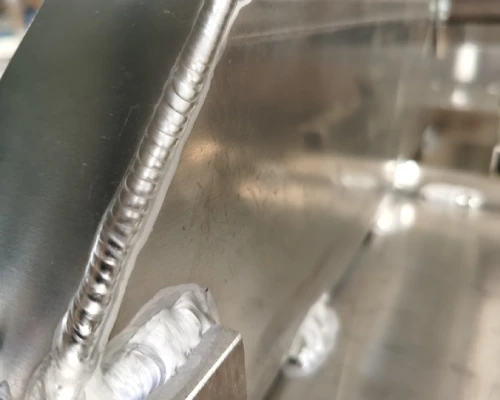
Argon gas, owing to its ideal mass and ionization characteristics, produces the most effective and uniform atomization zone (the bright silver-white stripes visible on both sides of the weld bead). If the GTAW aluminum welding gas is insufficiently pure, improperly flowed, or contaminated, atomization weakens, becomes uneven, or fails entirely. This results in darkened weld edges, inclusions, and poor fusion in GTAW aluminum welds.
Why choose Supro MFG's Custom metal Fabrication Services
Provide the most cost-effective cost solution for manufacturing and assembling products, expanding product competitiveness.
a technical team specializing in custom shell manufacturing for more than 30 years.
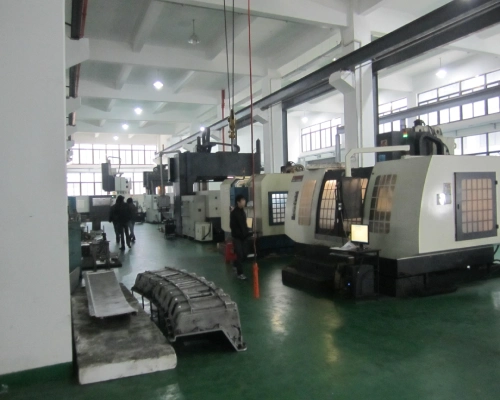
Advanced Manufacturing Equipment: Industry-leading custom metal enclosure manufacturer with in-house sheet metal, die casting, precision machining workshops, and surface coating workshops.
ISO 9001-2015, PPAP III level, RoHS, NEMA, CE and other certified production standards.
24H*7 online English technical support: The professional English team responds quickly to users’ technical questions online at any time.
help users from product design, prototype, batch manufacturing, surface treatment, assembly and packaging, transportation and a series of value-added services.
With in-house mechanics and chemistry laboratories, it can quickly monitor manufacturing process quality control to ensure the delivery of high-quality products.
Accept to sign NDA documents to ensure that customers’ product information is protected.
Door-to-door delivery in customizable secure packaging after complying with the delivery details agreed with the customer.
GTAW Welding Aluminum Gas Selection Strategy
When selecting GTAW welding aluminum gas, it is crucial to recognize that this decision extends beyond mere gas cost considerations. It directly impacts weld integrity, production efficiency, and overall manufacturing expenses. Aluminum's high reactivity and the high melting point of its surface aluminum oxide layer demand that the shielding gas effectively promote cathode sputtering and maintain a stable arc plasma.
Pure Argon Gas
Pure argon gas serves as the benchmark choice for most GTAW aluminum welding applications. It delivers excellent arc stability, reliable cathode cleaning, and relatively low cost. As a monoatomic gas, argon possesses a low ionization potential, enabling the formation of a stable, soft arc under alternating current (AC) conditions. This produces a broad, uniform cathode sputtering zone that effectively cleans the aluminum surface oxide layer.
However, the primary limitation of this GTAW welding aluminum gas lies in its relatively low thermal conductivity. This results in lower arc energy density, leading to shallow penetration and restricted welding speeds. For materials exceeding approximately 3/8 inch (about 10 mm) in thickness, GTAW welding aluminum with pure argon typically requires higher heat input (achieved by increasing current or reducing welding speed) or multiple passes. This increases the risk of workpiece distortion and elevates overall production costs. Consequently, pure argon is the preferred choice for GTAW welding thin aluminum sheets and decorative welds where appearance is critical.
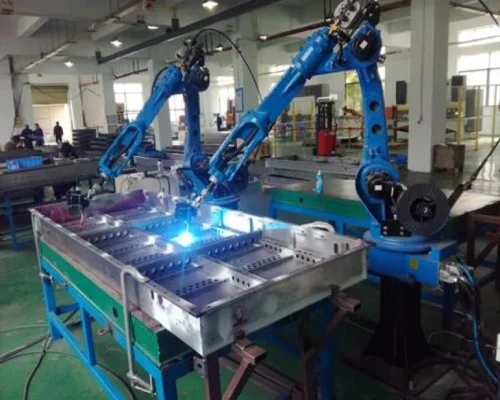
Argon-Helium Mixture
To overcome the heat input limitations of pure argon, incorporating helium as a component in the mixture is a key strategy. Helium possesses higher ionization energy and thermal conductivity, enabling the generation of a hotter, more concentrated arc during GTAW aluminum welding.
Argon-helium mixtures offer three key advantages: significantly increased penetration depth (up to 30%-50%), enabling faster GTAW welding speeds for enhanced productivity, and reduced porosity through extended molten pool residence time.
Common mixing ratios include:
Ar/He, 75/25, balancing arc characteristics and cost; while Ar/He 50/50 or higher helium ratios are used for high thermal conductivity aluminum alloys (e.g., 5000 series) or thicker section GTAW aluminum welding. Although helium increases direct gas costs, its ability to effectively boost productivity, reduce potential rework rates, and improve GTAW aluminum welding quality typically yields superior economic benefits.
GTAW Aluminum Welding Gas Selection Decision Process
To optimize weld quality and control costs, selecting the appropriate GTAW aluminum welding gas is critical. Key factors to consider include:
Pure argon is typically suitable for thin aluminum sheets (<1/8 inch or 3mm). As thickness increases, progressively higher helium proportions should be introduced.
Helium-mixed gases possess higher ionization energy and thermal conductivity, enabling faster GTAW aluminum welding speeds.
For joint geometries involving deep gouges or fillet welds, gas combinations requiring higher heat input are necessary.
Cost budgets must be balanced against performance requirements.
Only 4 steps
online custom metal fabrication parts
Contact our experts team and experience the efficiency and economic benefits of digital metal fabrication services.
Upload Design Files
STL , STEP (.stp), IGES (.igs), (.ZIP), or PDF.
Also be a sample or an idea
Quote & Design Analysis
Instant factory quotes and DfM reports, the most reasonable solution.
Manufacturing Begins
Digital processes can initiate order tasks within 24 hours.
On-Time Delivery
Keeping delivery promises, approved by 3000+ Global Company buyers.
Coordination and Control of GTAW Aluminum Welding Parameters
To achieve stable weld quality, precise adjustment of GTAW aluminum welding parameters is essential—not merely setting simple values. This process exhibits multivariable, nonlinear, and time-varying characteristics, with dynamic interactions between parameters.
GTAW Welding Aluminum Gas Flow Rate: Precise Control
Gas flow rate is a GTAW aluminum welding parameter requiring precise calibration, not a simple on/off setting. Insufficient gas flow (e.g., below 15 SCFH) causes laminar flow protection failure and atmospheric intrusion, directly leading to weld oxidation and porosity.
However, excessive GTAW aluminum welding gas flow is equally detrimental. Excessively high flow rates (e.g., exceeding 30 SCFH) create turbulence, drawing air into the protective gas shield via the Venturi effect. The precise range for GTAW aluminum welding gas flow depends on the nozzle diameter, the distance between the torch and the workpiece, and the joint geometry.
GTAW Welding Aluminum Gas Purity and Contamination: Hidden Quality Risks
Argon gas with a purity of 99.996% (Grade 4.6) or higher is the baseline requirement for GTAW welding aluminum. However, the critical risk point often lies not in the cylinder itself, but in the delivery system. Contaminants frequently originate from moisture in ruptured piping, oil contamination from compressed air systems, or air permeation through aged hoses. These contaminants compromise the value of high-purity gas, directly leading to porosity and oxide inclusions in GTAW aluminum welds.
Our experience indicates that initial contamination is introduced when new cylinders are connected to the system without adequate purging at the connection points. Therefore, implementing regular GTAW aluminum welding gas purity audits and using low-permeability hoses specifically designed for welding (such as PVC-free types) are critical measures to mitigate this hidden quality risk.
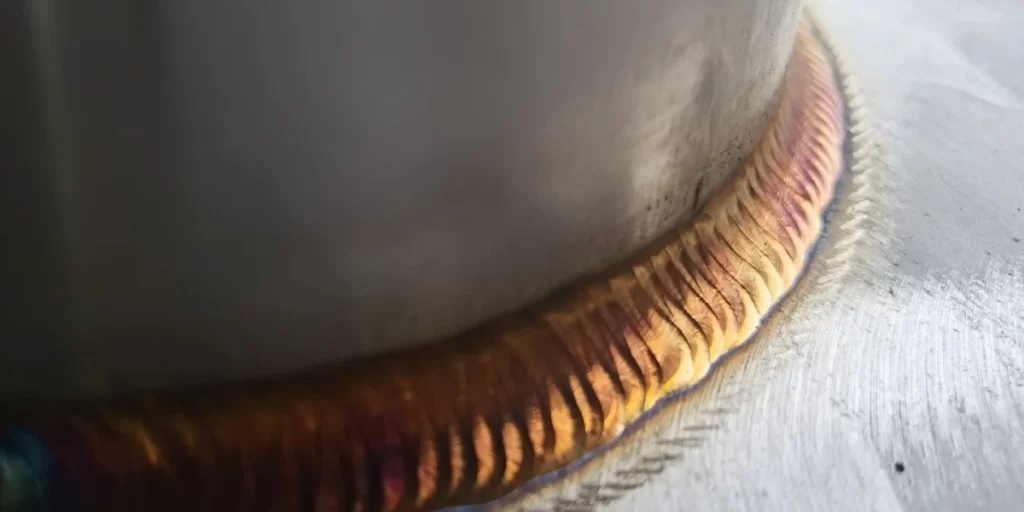
Pre-flow and Post-flow Time Settings for GTAW Aluminum Welding Parameters
Pre-flow and post-flow represent two common GTAW aluminum welding parameters. Pre-flow (typically 0.5–1.5 seconds) ensures that shielding gas completely displaces air within the torch and nozzle prior to high-voltage, high-frequency arc striking, preventing initial tungsten contamination and oxidation at the arc initiation point. Post-flow is even more critical—after arc extinction, it must continue shielding the still-incandescent weld pool and tungsten electrode until they cool below the oxidation threshold (approximately 400°C). In GTAW aluminum welding, insufficient post-flow time directly causes crater cracks at the weld termination, oxidation discoloration, and tungsten electrode burn-off.
Synergy Between Gas and Electrical Parameters
The selection of shielding gas and electrical parameter settings for GTAW welding aluminum are not independent variables; they exhibit profound synergistic effects. When using helium mixtures, their higher ionization potential allows adjustment of the electrode negative (EN) proportion within the AC waveform to achieve deeper penetration while maintaining sufficient cathode cleaning action.
This synergy becomes more refined in pulsed GTAW welding aluminum: the high heat input during peak current demands reliable gas shielding to counteract potential increased turbulence tendencies; selecting helium mixtures permits the use of slightly lower peak currents to achieve the same penetration depth, thereby reducing the heat-affected zone.
Understanding and appropriately applying the synergistic effects of gas and electrical parameters in GTAW welding aluminum is central to achieving process optimization, enhancing welding speed and efficiency while ensuring quality.
Looking for a reliable custom sheet metal fabrication companies?
Talk To Supro MFG Expert Team
Contact us for competitive ex-factory prices,
and a full range of technical support services.
Analysis and Countermeasures for Common Defects in GTAW Welding of Aluminum
Understanding how shielding gas can cause welding defects is critical for evaluating aluminum GTAW welding services and controlling quality.
Darkened Weld Edges and Stains
Darkened weld edges or deep stains result from shielding gas failure during GTAW welding of aluminum. When the protective gas blanket is compromised, the high-temperature aluminum molten pool and tungsten electrode react with atmospheric oxygen and nitrogen, forming oxides and nitrides.
Root causes typically include:
Insufficient GTAW aluminum welding gas flow (below ~15 SCFH) failing to create an effective shield; or excessively high flow (above ~30 SCFH) generating turbulence that entrains air.
Leaks or contamination in the gas supply system, such as aged hoses or loose connections.
Excessive torch angle or excessive distance from the workpiece disrupting the protective gas umbrella.
Post-flow time set too short in GTAW aluminum welding parameters, causing oxidation during weld cooling.
Countermeasures: Implement systematic GTAW aluminum welding gas management using calibrated flow meters, ensure gas purity, set adequate post-flow time based on nozzle size and welding current, and maintain draft-free welding areas.
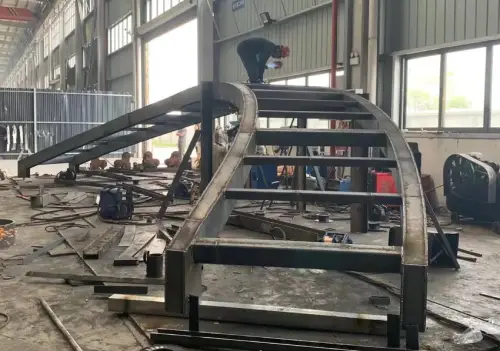
Dense Porosity
Dense porosity ranks among the most destructive and costly defects in GTAW aluminum welding. Hydrogen exhibits relatively high solubility in liquid aluminum, but its solubility sharply decreases during metal solidification, leading to entrapment and bubble formation.
Primary sources of this hydrogen include: moisture contamination in the GTAW aluminum welding gas delivery system, such as from cracked water-cooled torches, condensation, or damp cylinders; contaminants on workpiece or filler wire surfaces, including oil, grease, or condensation; and inadequate pre-weld cleaning.
Countermeasures: Implement a systematic cleaning and prevention program. All weld areas and filler wires must undergo rigorous cleaning. Use high-quality, low-permeability hoses in the GTAW aluminum welding gas delivery system and perform regular leak checks to ensure gas purity meets specifications. Maintain sufficient and stable gas flow to provide a consistent protective environment.
Insufficient Penetration and Excessively Slow Welding Speed
This directly reflects limited heat input and improper gas selection for GTAW aluminum welding. Pure argon provides excellent arc initiation and cathode cleaning, but its low thermal conductivity limits arc energy density and penetration capability. For thicker plates, pure argon alone often fails to achieve adequate penetration.
Solution: Employ an argon-helium mixture. Helium possesses higher ionization energy and thermal conductivity, generating a hotter, more concentrated arc. This characteristic enables deeper penetration in GTAW aluminum welding, permits faster processing speeds, and facilitates gas escape due to the slightly longer molten pool residence time, thereby reducing porosity.
Conclusion
In summary, GTAW welding aluminum gas is not a common consumable but an active process medium with strict technical specifications. The selection and application quality of shielding gas directly determine weld integrity, production efficiency, and overall manufacturing costs.
Supro is a specialized metal fabrication manufacturer. Leveraging advanced equipment, extensive manufacturing experience, and a professional engineering team, we provide perfect aluminum GTAW welding services to over 3,000 companies worldwide, offering genuine manufacturer pricing.
At Supro, we deliver comprehensive aluminum GTAW welding services—assisting not only in selecting suitable aluminum materials for your projects but also efficiently delivering required components. Certified to ISO9001 and TS16949 standards, we provide expert technical guidance and complete manufacturing solutions for precision engineered aluminum alloy parts, aluminum enclosures, standard aluminum extrusions, or custom aluminum prototypes.