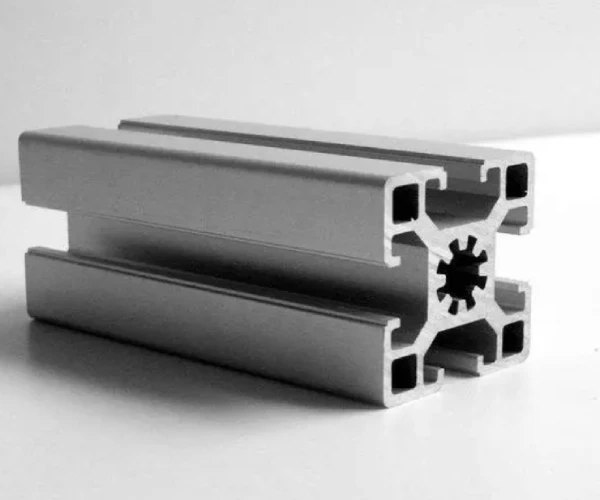
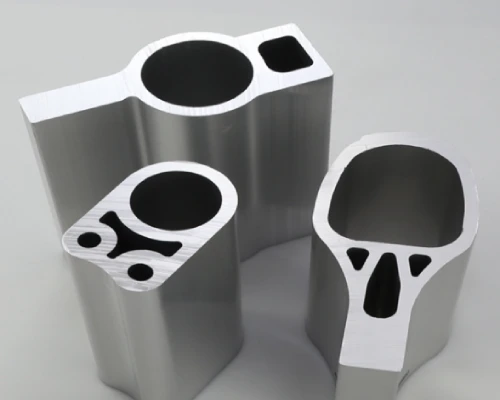
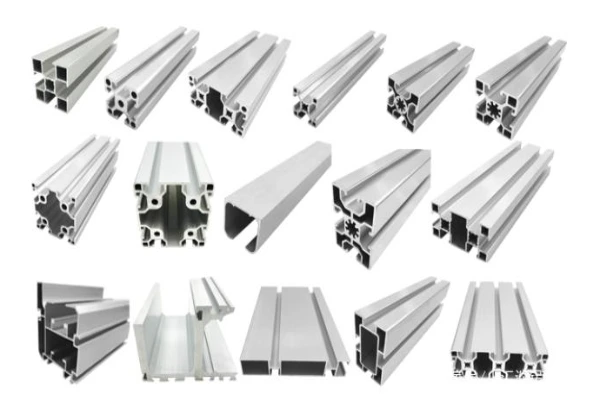

extruded aluminum fabrication is a basic but very important forming process that passes aluminum metal through a pre-determined die to obtain a continuous aluminum profile with a specific cross-sectional shape, retaining the natural advantages of aluminum’s light weight and corrosion resistance, while allowing for complex structures that are widely used in the production of automobiles, airplanes, power generators, buildings, offices and other equipment and components.
The article will analyze extruded aluminum fabrication in detail, starting from the core definition, then analyzing its components, types, advantages and limitations, and finally listing the common applications, which will help you to know extruded aluminum fabrication comprehensively.
what is extruded aluminum fabrication?
extruded aluminum fabrication is a manufacturing process in which a heated aluminum billet is passed through a custom shaped die to obtain a specific cross-section of aluminum profiles. It’s like squeezing toothpaste out of a tube – when you squeeze the tube, the toothpaste comes out of the opening and forms a strip of paste that conforms to the shape of the opening. extruded aluminum fabrication is very similar, except that the toothpaste is replaced with heated, softened aluminum rods, and the squeezing force comes from a huge hydraulic press.
The main steps in extruded aluminum fabrication:
- billet heating
- extrusion
- cooling and straightening
- cutting
- Heat treatment (e.g. T5 or T6)
- Finishing (e.g. anodizing, powder coating)
components of extruded aluminum fabrication
Aluminum metal blank
This is the raw material for the extrusion process and is a cylindrical solid aluminum bar. As the object to be processed, its composition and quality directly determine the properties of the final product. It is usually made of aluminum alloys such as 6061, 6063.
Extruder
This a huge industrial machine that mainly contains:
Vessel: a hardened steel cylinder to hold the heated aluminum billet and die. It needs to withstand extremely high temperatures and pressures.
Main Ram/Plunger: A huge hydraulically driven piston which exerts a huge forward thrust to push the aluminum billet towards the die.
Spacer: a piece of high-strength steel located between the Main Ram/Plunger and the billet, which ensures that the pressure is evenly distributed across the cross-section of the billet and prevents the aluminum stock from spilling backwards.
Mold
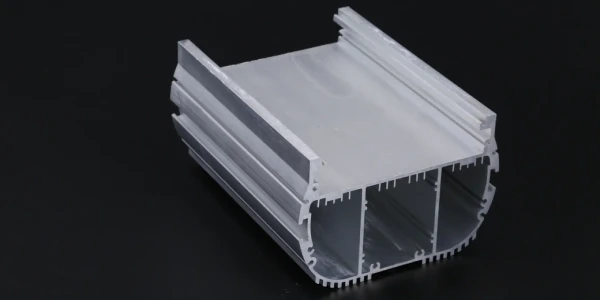
It is made of incredibly hard tool steel with holes that correspond exactly to the shape of the cross-section of the final product, and it determines the shape of the aluminum after extrusion. Die design is one of the most critical and complex aspects of extrusion technology, mainly solid die, hollow die and semi-hollow die.
Auxiliary system
Heating furnace: before extrusion, the aluminum billet is heated to a plastic state of about 400-500°C, so that it is easy to flow but not melt.
Feeder: Automatically removes the heated aluminum billet from the furnace and accurately feeds it into the container of the extruder.
Cooling system
When the aluminum is extruded out of the die, strong air cooling or water mist cooling is usually used to make the aluminum profile cool down and shape quickly.
Why Choose Supro MFG’s Custom Metal Fabrication Services
Real ex-factory price:
Provide the most cost-effective cost solution for manufacturing and assembling products, expanding product competitiveness.
Professional technical team:
a technical team specializing in custom shell manufacturing for more than 30 years.
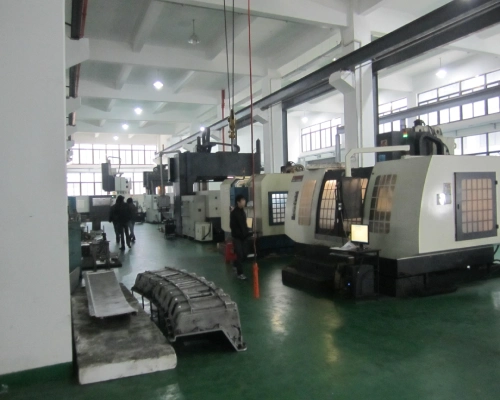
Advanced Manufacturing Equipment: Industry-leading custom metal enclosure manufacturer with in-house sheet metal, die casting, precision machining workshops, and surface coating workshops.
ISO 9001-2015 Manufacturer:
ISO 9001-2015, PPAP III level, RoHS, NEMA, CE and other certified production standards.
24H*7 online English technical support: The professional English team responds quickly to users’ technical questions online at any time.
One-stop manufacturing solution:
help users from product design, prototype, batch manufacturing, surface treatment, assembly and packaging, transportation and a series of value-added services.
Authoritative testing capabilities:
With in-house mechanics and chemistry laboratories, it can quickly monitor manufacturing process quality control to ensure the delivery of high-quality products.
Intellectual Property Protection(NDA):
Accept to sign NDA documents to ensure that customers’ product information is protected.
Commitment to On-Time Delivery:
Door-to-door delivery in customizable secure packaging after complying with the delivery details agreed with the customer.

Types of extruded aluminum fabrication
There are various types of extruded aluminum fabrication, mainly including direct extrusion, indirect extrusion, cold extrusion and hot extrusion.
Direct extrusion: This is the most common and widely used method. A die is fixed at the end of the extruder. A hydraulic punch moves forward and exerts direct pressure on the aluminum billet inside the container, forcing the aluminum to be extruded from the die. The direction of flow of the profile coincides with the direction of movement of the punch.
Indirect extrusion: the die slides along with the punch, the billet is held in the container and the die is pushed against the billet. This method of extruded aluminum fabrication results in less friction, more uniform metal flow and better surface quality.
Cold Extrusion: This is done at room temperature or slightly lower. Suitable for soft aluminum alloys (e.g., 1050, 3003) to make small, simple parts that require great extrusion force, and is not as common in aluminum fabrication as hot extrusion.
Hot extrusion: The aluminum billet is heated to a certain temperature (400-500°C) and then extruded. This is the method used in the vast majority of extruded aluminum fabrication because it dramatically reduces the deformation resistance of the aluminum and increases the plasticity.

Advantages and disadvantages of extruded aluminum fabrication
Advantages of extruded aluminum fabrication
Design freedom: by changing molds, any two-dimensional cross-sectional shape, from simple rods and bars to complex structures with multiple chambers, can be fabricated by aluminum extrusion fabrication.
Material Utilization: The process produces profiles that are very close to the size and shape of the final product, reducing subsequent machining and significantly reducing material waste and secondary processing costs.
Strength-to-weight ratio: Aluminum is inherently lightweight, and extruded aluminum fabrication allows for the design of reinforcements, multiple chambers, etc. to optimize the cross-section structure, achieving very high strength and rigidity without adding weight. This is very important for the transportation and aerospace sectors.
Mass production: Once the dies are made, extruded aluminum fabrication can produce long profiles in a fast and continuous manner, with very high productivity, making it ideal for mass production.
Surface quality: the surface quality of extruded profiles is good, and aluminum is very suitable for various surface treatments, such as anodic oxidation, powder coating, etc., which can greatly enhance its corrosion resistance, aesthetics and durability.
Limitations of extruded aluminum fabrication
Higher initial tooling costs: The design and manufacture of tooling (especially for complex shapes) is expensive and time consuming, which is uneconomical for small batch production.
The cross-section shape must be consistent: the cross-section of the profile must be uniform throughout its length. Manufacturing of parts with changes in cross-section along the length or with lateral projections/depressions requires subsequent machining or welding.
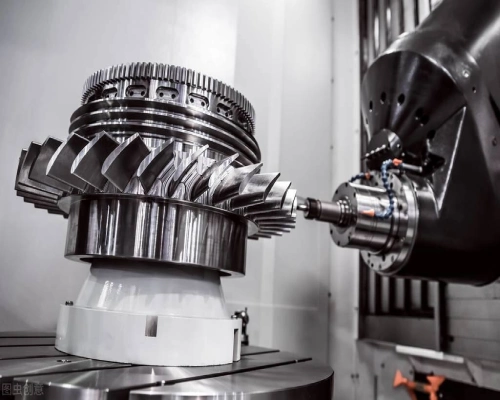
Tolerances and distortions: aluminum extrusion fabrication, although highly accurate, may result in slight bends, distortions, or dimensional changes in the profile during cooling, which need to be corrected by processes such as straightening. For applications with extreme accuracy requirements, additional machining may be required.
online custom metal fabrication parts
Only 4 steps
Contact our experts team and experience the efficiency and economic benefits of digital metal fabrication services.
Upload Design Files
STL , STEP (.stp), IGES (.igs), (.ZIP), or PDF.
Also be a sample or an idea
Quote & Design Analysis
Instant factory quotes and DfM reports, the most reasonable solution.
Manufacturing Begins
Digital processes can initiate order tasks within 24 hours.
On-Time Delivery
Keeping delivery promises, approved by 3000+ Global Company buyers.
Application of extruded aluminum fabrication
Construction: used to make supporting frames for window frames, door frames, curtain walls; skylights, light roofs, canopies, supporting structures for corridors and walking bridges, etc.
Transportation: used to make body frames, crash beams, bumpers, engine mounts, rails, heat exchangers, and battery trays and motor shells for new energy vehicles.
Aerospace: for aircraft fuselage trusses, cabin structures, racks and seat parts, etc.
Shipbuilding: used for hull structure, deck railings, masts and cabin interiors, etc.
Electrical and electronics: for computer housings, server cabinets, communication equipment chassis and electrical enclosures, etc.
Industrial equipment: frame structures for automation equipment, robots, machine tools, testing instruments and assembly line workstations, etc.
Consumer goods and furniture: table legs, bookshelves and cabinets, hiking poles, tent poles, bicycle frames, badminton racket frames and ski poles, etc.
Summary
Aluminum extrusion fabrication is a basic manufacturing process that has become an indispensable part of modern manufacturing by virtue of its versatility, high precision and high efficiency. Through flexible mold design, it can accurately transform aluminum alloy into various profiles with complex structures, which are widely used in automobile manufacturing, aerospace, industrial equipment and other fields, and are the core components of countless products in our daily life.
If you are in need of extruded aluminum fabrication services, please contact us now. supro is a professional extruded aluminum fabrication manufacturer, with the advantage of advanced equipment, rich manufacturing experience and professional engineering team, providing perfect extruded aluminum fabrication services for more than 3000 companies worldwide.
Supro is a professional extruded aluminum fabrication manufacturer, with advanced equipment advantage, rich manufacturing experience and professional engineering team, providing perfect extruded aluminum fabrication services with real manufacturer quotation for more than 3000 companies worldwide. We can deliver all kinds of products efficiently and on time, from product design, rapid sheet metal prototype fabrication to mass production, we can provide professional technical support and excellent quality. And we provide one-stop manufacturing solution with cost competitive product supply!